San Francisco field note
Cable cars, steep streets, and moving fog
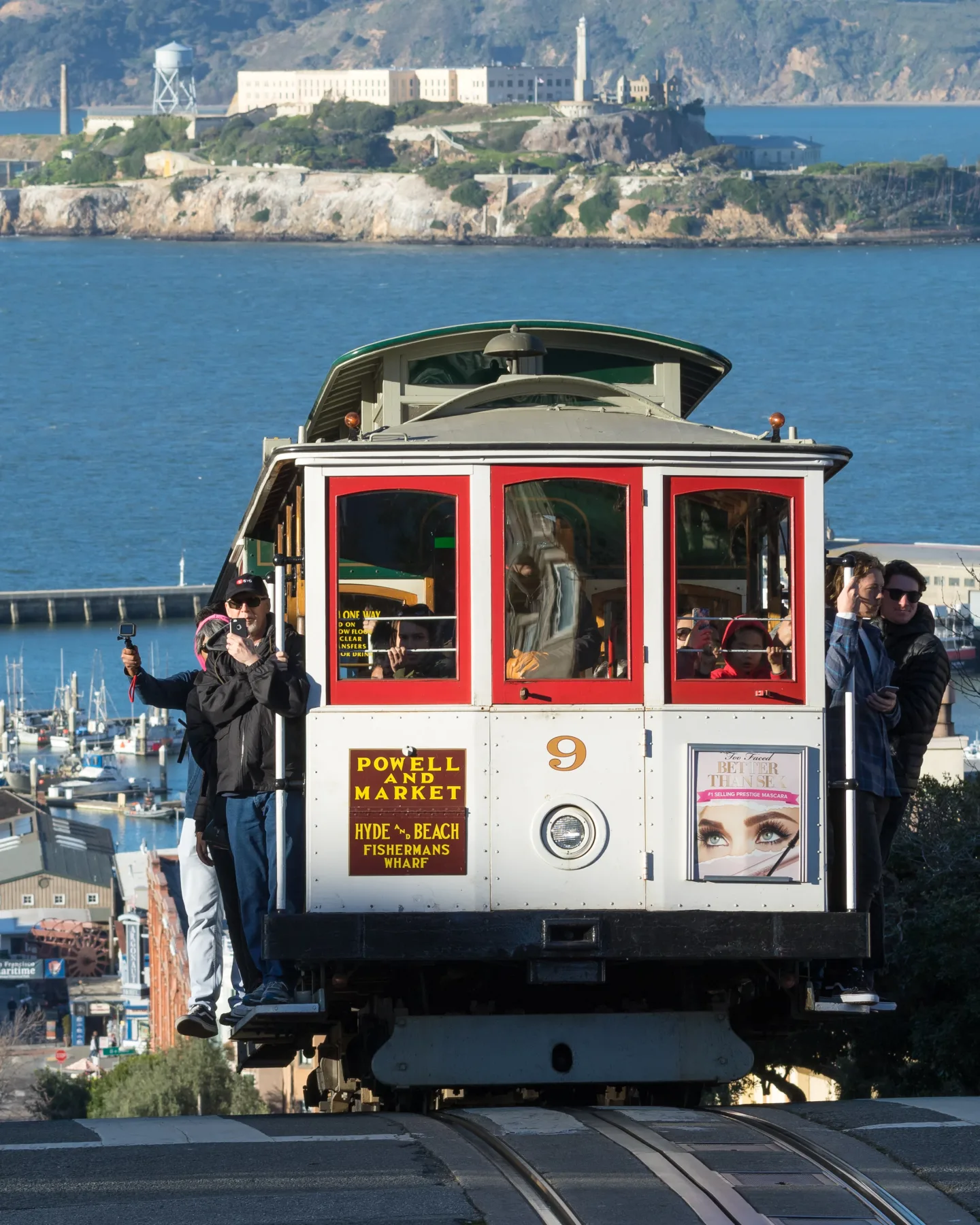
San Francisco’s cable cars are moving pieces of public history. The San Francisco Municipal Transportation Agency dates Andrew Smith Hallidie’s first test on Clay Street to August 2, 1873, with public service beginning the following month. The system used a continuously moving underground cable that a grip operator could engage or release, offering a mechanical answer to the difficulty of hauling streetcars up wet, steep streets.
Cable railways expanded quickly. SFMTA records that companies eventually laid 53 miles of track connecting the waterfront, downtown, hills, neighborhoods, parks, and the Presidio. Electric streetcars later proved less expensive and more flexible, and the 1906 earthquake and fires damaged the city and its transportation infrastructure. Some cable routes were rebuilt because they handled grades well, but the network became much smaller.
The surviving system owes its existence to civic action as much as engineering. In the late 1940s, Friedel Klussmann and the Citizens’ Committee to Save the Cable Cars organized against proposals to remove service. Voters approved protection for the Powell Street system. Today the continuing operation and minimum service of the cable cars are included in San Francisco’s City Charter, and the cars are recognized as a National Historic Landmark.
Operation remains hands-on. A grip person controls the car’s connection to the cable and works with a conductor. Tracks, turntables, cables, brakes, streets, and passenger boarding all require coordination. The Cable Car Barn and Powerhouse contains the machinery that moves the cables and also houses a museum. For a rider, the bell and open-sided car may feel timeless; behind it is an active municipal transportation system with rules, maintenance, and current service conditions.
The city’s hills and fog complete the familiar image but should not be treated as decoration alone. Grades affect sight lines and stopping distance. Fog can change visibility by location and hour. Pedestrians, cyclists, transit vehicles, loading activity, and narrow or one-way streets share limited space. Visitors should use current SFMTA instructions, wait at designated stops, follow crew directions, and avoid treating an active street as a photo set.
Three cable-car lines remain, and ordinary transit needs share the system with sightseeing demand. Stops, fares, operating hours, accessibility arrangements, and service interruptions should be checked directly with SFMTA. The agency’s historical material also distinguishes cable cars from San Francisco’s electric historic streetcars, two systems that visitors sometimes combine even though their propulsion and routes differ.
A practical auto-insurance connection
A cable car does not determine a private driver’s insurance, and city weather does not guarantee a claim. The useful connection is to describe actual vehicle use and choose coverage deliberately. Liability addresses covered harm caused to others; collision and comprehensive address different kinds of covered damage to the insured vehicle; uninsured-motorist and medical-payments options have separate roles. Parking, mileage, household drivers, deliveries, and garaging should be disclosed accurately. The California Department of Insurance auto guide explains common coverages and current minimum limits. The issued policy controls.