San Francisco field note
Alcatraz Island: more than the federal prison years
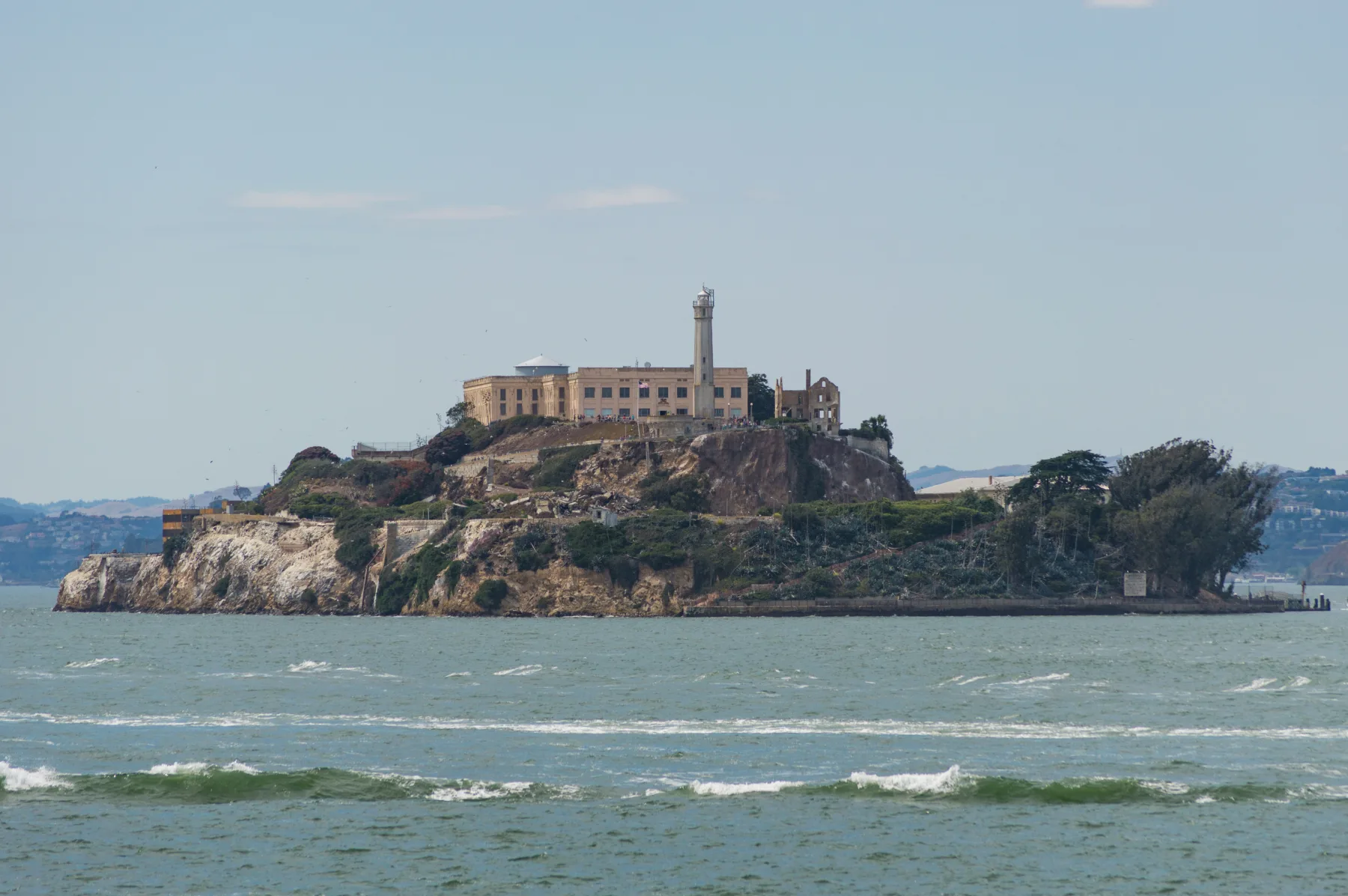
Alcatraz sits in San Francisco Bay a short ferry trip from the city’s waterfront. Popular culture often reduces the island to a federal penitentiary, but the National Park Service interprets a much longer and more complicated history. The island has served as a military fortification, military prison, federal prison, site of Native American activism, bird habitat, and public historic place.
The United States reserved Alcatraz for military use during the nineteenth century as California’s population and strategic importance grew. Construction of a fortress began in the 1850s. The island’s position inside the bay made it part of a proposed defense network with Fort Point and other installations. Cannon, walls, guard structures, and a citadel reshaped the rock, although military technology changed faster than some of the fortifications could be completed.
Alcatraz also held military prisoners. By the early twentieth century, prisoners had constructed a large concrete cellhouse. The Department of Justice later converted the island to a federal penitentiary, which operated from 1934 through 1963. Its isolated setting and highly controlled routines were intended for prisoners considered difficult to manage elsewhere. The famous names associated with that period are only one part of the lives, labor, discipline, and institutional decisions preserved there.
From November 1969 through June 1971, Indians of All Tribes occupied Alcatraz. The National Park Service explains that the action drew national attention to Native American rights, federal policy, and demands for self-determination. That history is not a footnote to a prison story. It is a central layer of the island’s modern significance and is interpreted at the site alongside military and incarceration history.
Alcatraz joined the Golden Gate National Recreation Area in 1972 and opened to the public the following year. Visitors now arrive by authorized ferry and should use current National Park Service information for accessibility, weather, closures, and preservation rules. The buildings, gardens, nesting birds, shoreline, and exhibits all require care. A ticketed attraction is also a protected cultural landscape with fragile resources.
The island’s stories also require care with language. Military prisoners, federal inmates, correctional staff, Native activists, families, and park employees experienced the place in different periods and under different authority. A useful visit does not collapse them into entertainment. Reading the Park Service chronology before traveling makes the cellhouse, occupation exhibits, gardens, and shoreline easier to place in context.
An insurance connection without borrowing the landmark’s story
Alcatraz shows how a building’s use, construction, maintenance, and governing responsibility can change over time. A private residence is not comparable to a historic federal island, but the planning lesson is sound: insure the property that actually exists and understand who is responsible for which parts. Home and condo reviews should use current building details, association documents when applicable, and a realistic rebuilding estimate. The California Department of Insurance residential guide describes common dwelling, contents, loss-of-use, and liability sections. The issued policy controls.